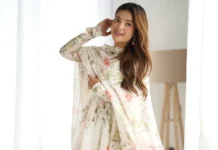
The Indian ethnic fashion is a perfect combination of symbolism and the trends. One of the most diverse and revealing options under new wardrobes is the Green Saree and the Palazzo Suit. Whereas the former is draped in classic grace, the latter is a traditional comfort of tThe Symbolism and Grace of a Green Saree
In the Indian culture, a Green Saree has a cultural and emotional meaning. Green can be interpreted to mean prosperity, harmony, renewal and celebration. Due to such symbolism, it is commonly used during festivals, weddings and other good events.
A Green Saree is also attractive because it is not only in color but it also can be adapted to different fabrics. In the case of silk, chiffon, georgette and organza, the color of green changes with the texture and weave. The rich emerald colors produce an opulent appearance befitting evening events and pastel or mint green colors are refreshing to any daytime event.
Green Saree can be styled to a great extent. It is complemented well with gold transportable items to convey a classic look or just a few silver ornaments to convey a contemporary one. The color itself is rich in the visual sense without having to be overloaded with details, which is a reasonable and yet impressive decision.
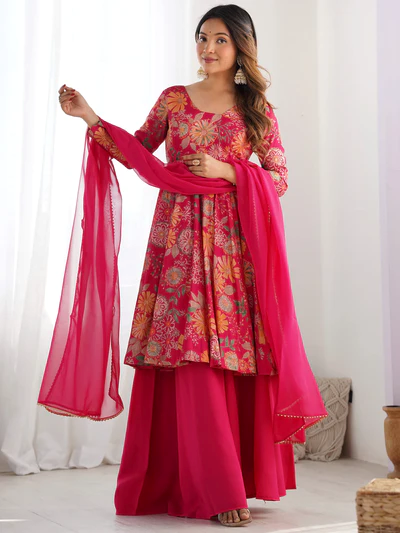
The Contemporary Appeal of a Palazzo Suit
Unlike the flowing nature of a saree, a Palazzo Suit is structured but has a contemporary shape. It usually consists of a straight or a little flared kurta and wide legged palazzo trousers with a matching dupatta.
The emergence of the Palazzo Suit in the ethnic fashion is the adaptation of the needs of changing lifestyle. Women are more eager to find clothes which can be both traditional and practical as well as easy to move around. The wide-leg style is comfortable, yet is neat and classy looking.
Palazzo suits are very versatile. They may be designed in terms of celebratory events, work, family and semi formal occasions. The cotton blends, georgette, silk and crepe fabrics enable the outfit to move between a casual and a high-cost setting.
Style and Silhouette Differences
The Green Saree is an expression of relaxed femininity and elegant posture. It is beautiful in that it curves around the body in a natural manner. The silhouette of the saree forms a vertical movement and makes one taller.
Conversely, Palazzo Suit is structured tailoring with loose lowering. The long trousers make the body balanced and proportional which makes the piece of clothing appropriate to wear long without inconvenience.
As far as the styling is concerned, the saree gives a chance to experiment with the blouse designs and ways of draping it. Also, the palazzo suit is quite diversified in terms of their neckline, sleeve designs, and trouser designs.
Occasion-Based Preference
Weddings, festive rituals, cultural events and traditional celebrations are some of the occasions where a Green Saree is frequently dressed as there is symbolism and elegance that is important in this event. It is rich in terms of appearance, and can be used in the daytime or during the evening, depending on the fabric choice.
Palazzo Suit, in its turn, is the best choice among engagement ceremonies, festive event, office party, and family events, where comfort and sophistication are of equal importance. It offers convenience of movement and ethnic originality.
Investment and Longevity
When made of quality material and finished, the two garments are providing long term clothing value. A Green Saree that is designed well can be worn with various blouses and accessories because it can be re-styled many times. On the same note, a high-end Palazzo Suit may be worn with other dupattas or layered to give new appearances.
Care of the stitch, qualities of the cloth and finishing will make it durable and can be used again in various events.
Conclusion
The Green Saree is the symbol of the culture, beauty and draped beauty that is eternal. Palazzo Suit is a symbol of the contemporary comfort mixed with the traditional style. Although the figure of the two garments is different, they both exhibit the fact that the Indian ethnic fashion is transforming without jeopardizing its heritage basis.
The decision between them is based on the occasion, comfort preference, and personal style, but jointly they demonstrate the diversity and the abundance of the modern ethnic clothing.